Responsive FLEXibility
 

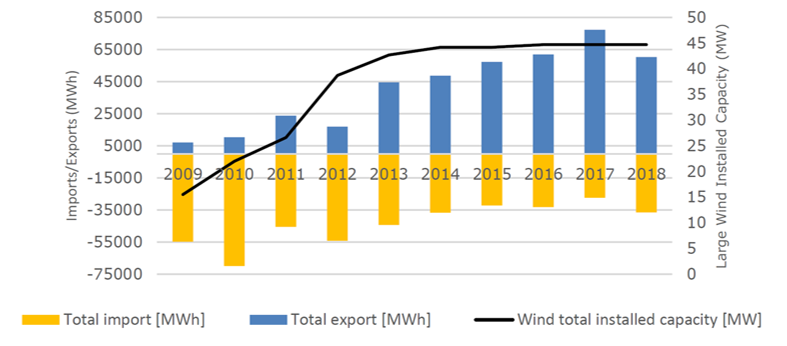
The Orkney Islands, situated in the northern region of Scotland, boast a significant renewable energy production capacity derived from wind turbines, which occasionally face curtailment due to local grid limitations. This curtailment leads to an approximate loss of 15 to 20% of wind turbines output, predominantly owned by community entities. Concurrently, the Orkney population represents one of the most vulnerable segments in the UK to fuel poverty, attributed to rural demographics and substantial energy expenditure on transportation. Consequently, an experimental framework was formulated to capitalize on curtailed wind energy by redirecting it towards residential Electric Vehicle (EV) charging infrastructure.

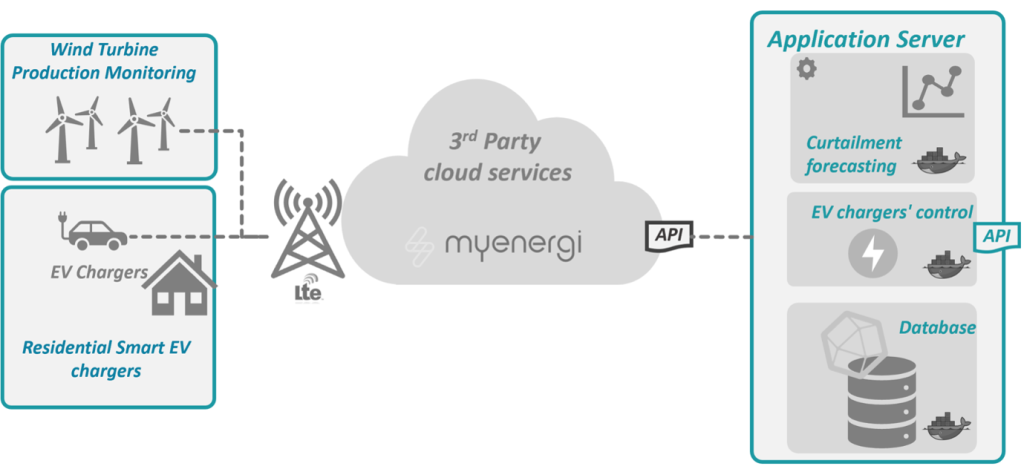
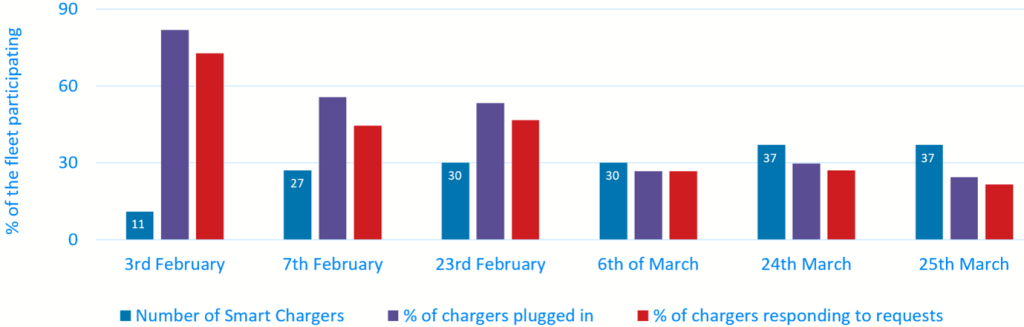
This study entailed forecasting of periods of local grid constraints and heightened wind power generation, prompting 37 EV owners to connect their vehicles to the grid. During peak wind energy production intervals, the charging capacity of the EV fleet was remotely augmented to alleviate local grid constraints and harness surplus energy that would have been curtailed otherwise. Findings reveal that, on average, only 20% of EVs are actively engaged in providing grid flexibility, with a mere 16% actually in a position of increasing their charging power due to capacity limitations.

Project Information
 
City, Country
Orkney Islands, UK
Duration (Start/End Dates)
January 2023 – January 2024 (actual period of the trial/demonstration) Overall, ReFlex is a 5-year project that started October 2019.
Funding Source
UKRI – Innovate UK
Project Lead (Organisation)
EMEC (European Marine Energy Centre, Orkney)
Project Partners
Aquatera, Community Energy Scotland, SMS, University of Glasgow, Heriot Watt University

Parameter

As designed

As built

No. of participants

40

37

Generation (kWp)

8000

8000

Storage (kWh)

10000

0

Unit price ($/kWh)

NA

NA

Project cost ($)

8M€

8M€

  • Increase in the consumption of locally-generated renewable energy on the Orkney Islands. This directly translated to a decrease in wind energy curtailment by the local distribution network operator, thereby affording Orkney residents the opportunity to augment their utilization of wind energy resources.
  • Mitigation of Local Grid Constraints: By strategically boosting consumption during targeted periods in the Orkney Islands, the objective was to alleviate thermal constraints on the electricity grid. This approach involved the localized utilization of wind energy, thereby diminishing the amount of power downstream these consumption nodes.
  • Electric Vehicle Flexibility: Participants in this experiment, comprising all Electric Vehicle (EV) owners, were equipped with remotely controllable chargers. These chargers were utilized to amplify charging power during periods of surplus wind turbine production. Consequently, an evaluation of EVs’ potential for direct load control demand response schemes was conducted.
  • Enhancement of Wind Turbine Owners’ Revenue: The flexibility afforded by EV chargers facilitated the consumption of electricity that would have otherwise been curtailed. This flexibility effectively reduced wind power curtailment by the grid operator, consequently bolstering revenue streams for wind turbine owners.


  • What problem(s) does the case study aim to resolve? This case study addresses two primary objectives. Firstly, it endeavors to augment the proportion of renewable energy within the energy consumption mix of the Orkney Islands. Secondly, it seeks to mitigate fuel poverty in Orkney by facilitating access to low-cost energy, namely energy that would have been curtailed and thus can be distributed at a reduced price without compromising the revenue of wind turbine owners.
  • What were the social objectives (if any)? While not fully executed, one aspect of this use case involved the establishment of a local energy market, granting consumers access to affordable energy. This initiative aimed to enable consumers to diminish their energy expenses.
  • What were the environmental objectives (if any)? The decrease in wind turbine output curtailment directly correlated with a reduction in electricity imports from the primary grid, which typically exhibit higher carbon intensity. Consequently, this led to a decarbonization of electricity consumption for certain Electric Vehicle (EV) owners.
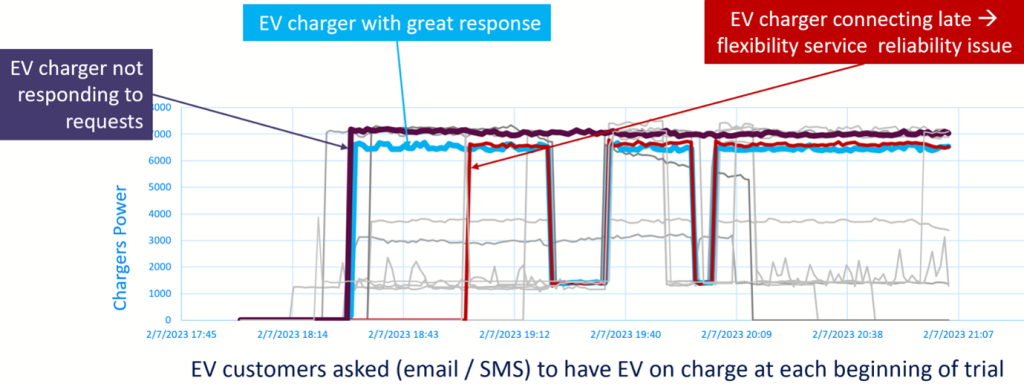
  • To what degree were participants actively involved in design or operation? In this use case, 37 Electric Vehicle (EV) owners participated, granting access to their EV charger data and relinquishing control over their EV charger’s power during potential curtailment periods. These participants were requested through direct messaging to connect their EVs to the grid when curtailment events were anticipated. While the initial commitment rate was high during the initial events (above 60%), it gradually decreased to a level below 30% with the escalation in event frequency.
  • Was participation financially or socially incentivised or both? No financial incentive was set-up for these experiments, which might actually explain the low participation rate when the frequency of demand response events increased.
  • What degree of demand response flexibility was provided? In this particular use case, demand response flexibility was achieved through direct load control of residential EV chargers. However, this flexibility was contingent upon the availability and connection status of EVs to the grid. Findings indicated that by the conclusion of the experiment, fewer than 30% of participants responded affirmatively to requests for EV grid connection. Furthermore, only 16% of participants were capable of charging or augmenting their charging power, primarily due to the fact that the state of charge of the battery of other participants was full.
  • Quotes from the case study:
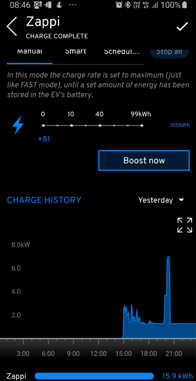
    • Quote from a participant who realised the remote control was successful after an event: “Ben, Looks like it worked. Screen shot of myenergi app attached.”
    • Quote from a participant who realised that he forgot to respond to the request: “ Ben, Apologise it went completely out of my head until my wife mentioned it at 9:30pm so very sorry for that I had even written myself a note which I ignored. Happy to participate again when required. Thanks”
    • Quote with recommendations from an engaged customer: “Ben, The e-mail was a bit close to the event and the car was already charged, so I suppressed the 80% max charge setting to mobilise the battery space. If I had been a less engaged member of the public it is likely I’d have not bothered to make the space. The fact that it was on a Monday meant the car hadn’t been used over the weekend for normal work use. If I’d known it was coming earlier then I’d not have charged up during the week and left more space. The idea of the text at 5pm or something would have also been useful. I also feel a ‘thanks for participating email’ to let me know it had happened would have been a good idea. Some degree of excitement and ‘membership’ of the event would go down well. This IS sexy stuff. We are trying to save the planet. We need to sell it to people harder and more excitedly I’d say. Hope this helps.”

The ReFLEX project underscored the significance of techno-economic modeling in determining optimal asset sizes and locations, as well as relevant business models. Access to energy data and permits proved crucial, with DNO (Distributed Network Operator) restrictions necessitating alternative flexibility sources to avoid curtailment, highlighting the importance of meticulous planning in SLES (Smart Local Energy Systems) initiatives.

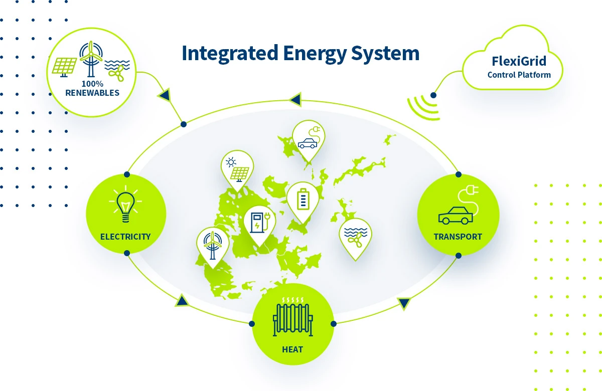
During the operational phase, establishing strong connections with customers and future installers is crucial for flexibility services. In ReFLEX, successful engagement was achieved with 5% of the population becoming members, thanks to parallel customer and community engagement efforts. Community involvement was ensured through various events, local communication channels, and a local shop acting as a point of contact. Future SLES initiatives could benefit from additional services like data visualization and welfare services to enhance acceptability. Initial integration into flexibility schemes in future pilots should target consortium members and customers with significant energy flexibility potential.

From the technical point of view, when selecting technology, considerations should include compatibility with end-users’ needs and existing infrastructure. For instance, flexibility devices should be accessible via API for interoperability. Prior to SLES deployment, thorough testing, including compatibility testing between control signals and asset protocols, is crucial. For example, ReFLEX conducted extensive testing on residential batteries to ensure the selected technology provided accessible data and remote control capabilities, emphasizing the need for interoperability testing across SLES services.
While external operators’ portals may provide access to data, ReFLEX found that employing a dedicated energy monitoring solution ensures greater accuracy and minimizes unnecessary actions. It’s advisable to define requirements for data collection frequency, storage size, and infrastructure. Finally, it became evident that issues such as customer monopolization, data management, and proprietary system licensing are as critical as technical solutions. Regulation changes pose a substantial threat to SLES projects, potentially altering entire business models. Concerns regarding GDPR and personal data complexity necessitate careful attention. Legal requirements differ between individuals installing their own assets and entities installing assets for individuals, with corresponding compliance obligations. Stakeholders leasing SLES assets should prioritize building warrant agreements for added assurance.


What outcomes are anticipated from the pilot? This pilot aimed to demonstrate the flexibility potential from EV chargers in Orkney Islands in order to propose an alternative to wind turbine curtailment.

What outcomes were delivered by the pilot? This pilot actually showed the strong involvement of the community with 25% of participation in flexibility events, but as well showed that it will require a large scale flexibility demonstrator to have a significant impact on wind turbine curtailment in the Islands.

https://www.reflexorkney.co.uk/


B. Couraud, M. Andoni, V. Robu, S. Norbu, S. Chen, D. Flynn, « Responsive FLEXibility: A smart local energy system », Renewable and Sustainable Energy Reviews, Volume 182, DOI : 10.1016/j.rser.2023.113343

B. Couraud, V. Robu, D. Flynn, M. Andoni, S. Norbu, H. Quinard, « Real-Time Control of Distributed Batteries With Blockchain-Enabled Market Export Commitments », IEEE Transactions on Sustainable Energy, Volume 13 , Issue 1 DOI : 10.1109/TSTE.2021.3121444



For more information on the Case Study
Contact Person: Pr David Flynn , Dr Benoit Couraud
Copyright Statement
agree that the case study information of Responsive FLEXibility can be shared under CC BY-NC-ND 4.0 license. This license allows others to download your works and share them with others as long as they credit you, but they can't change them in any way or use them commercially.