Project CommUNITY, a collaborative effort between EDF Energy’s Research & Development department, Repowering London, and UCL’s Energy Institute, sought to revolutionize urban energy consumption by harnessing the power of community-owned renewable energy. With a focus on increasing residents’ access to local low-carbon energy sources while simultaneously reducing overall costs, the project aimed to address pressing societal challenges such as fuel poverty and climate change. The CommUNITY aimed to empower urban communities, help enhance the utilization of local low-carbon energy among residents while simultaneously reducing their overall expenses.
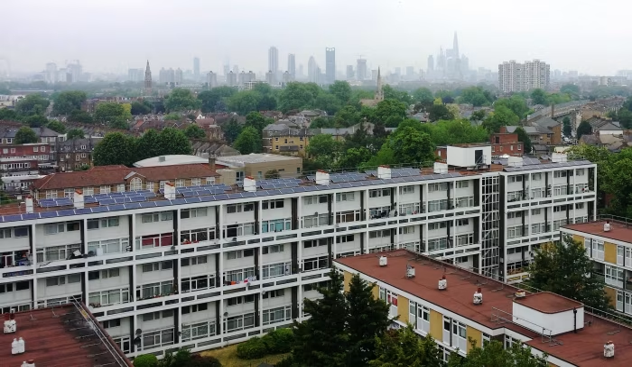
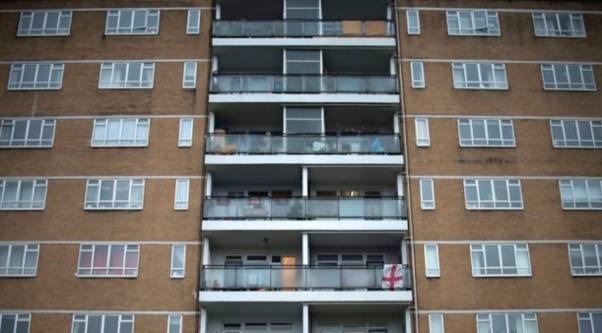
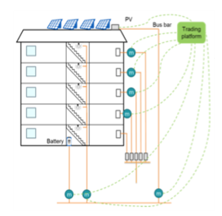
The project was centered around Elmore House, a residential block in Brixton, where a solar PV system was installed on the rooftop to generate clean electricity. Residents were provided access to this renewable energy through a peer-to-peer trading platform facilitated by blockchain technology. This platform allowed residents to manage and share their energy resources amongst themselves, promoting community engagement and fostering a sense of ownership over the energy they consumed.
Throughout the trial period, CommUNITY yielded promising results. Residents were able to source an average of 42% of their electricity needs from the solar PV system, resulting in tangible financial savings and a reduction in dependency on traditional energy suppliers. Moreover, the initiative demonstrated the viability of decentralized energy systems and underscored the importance of community-led initiatives in driving the transition to a sustainable energy future.
By showcasing the potential of community-owned renewable energy projects to address fuel poverty, promote sustainability, and foster community empowerment, CommUNITY provided valuable insights and lessons for policymakers, energy stakeholders, and communities alike. Moving forward, the project’s success serves as a beacon of inspiration, highlighting the transformative impact of collaborative efforts in reshaping the energy landscape and advancing towards a more resilient, equitable, and sustainable future for all.
|
Parameter |
As designed |
As built |
|
No. of participants |
a block of 62 two-bed properties |
25 households (appr. 60 inh.) |
|
Generation (kWp) |
70 kWp PV, 20 kWel CHP |
88 kWp PV, 21 kWel CHP |
|
Storage (kWh) |
virtual battery*: 1178 kWh *storage by shifting operation time |
virtual battery*: 564 kWh (real), battery 41 kWh |
|
Unit price ($/kWh) |
– (use existing flexibility) |
– |
|
Project cost ($) |
– |
400.000 Euro (research funding) |
The project set out to address a number of objectives:
Xavier Mamo, Director of Research & Development at EDF Energy:
“At EDF Energy, we are committed to making energy easier for our customers and unlocking the benefits that new technologies are bringing to the sector.
“By collaborating with our partners and using block chain technology, this project in Brixton aims to show how small communities in dense urban areas could benefit from a low carbon and local energy system in a new and transformative way.”
Throughout the CommUNITY project, numerous hurdles were discovered. Below will detail some key lessons learned and take away messages for other projects.
This project provided trial participants with electricity clamps to provide access to their electricity meter data due to the unavailability of smart meter data. This alternative is not scalable, and the use of smart meter data would be necessary for a large-scale deployment to be successful.
However, when smart meter data is to become available, accessing and using this data may prove difficult due to data privacy risks for participants. A successful P2P energy trading will rely on successful use of privacy enhancing technologies so that sensitive smart meter data is handled in a secure and privacy-preserving manner.
A public blockchain does not comply with the EU GDPR regulation including the `right to erasure’ allowing participants the ability to have their information deleted upon request. In addition, its use within a live environment imposes limitations that affect both analytics and user experience. For instance, analytics within the trial required retrieving all trades within a given market period. As the chain grows, this search becomes increasingly slower, such that additional information must be stored to efficiently limit the search space.
In practice, data will not always be available for all participants during each market period. A simple equipment failure or the data transmission network having an outage will result in ’data blackouts’ for participants. Handling these blackouts will be key to a robust deployment of a P2P market.
The CommUNITY project aimed at enhancing the consumption of local low-carbon energy among residents, while reducing their overall energy costs. This initiative facilitated residents’ ownership in a communal solar photovoltaic (PV) system installed on their block’s rooftop. It empowered residents to use, store, and directly trade electricity generated from solar panels within their community.
The project was also anticipated to demonstrate to broader society how small communities in densely populated urban areas can benefit from a low-carbon and locally sourced energy system in an innovative and transformative manner by implementing blockchain technology to facilitate peer-to-peer energy trading among residents.
The project achieved its goals by providing residents access to electricity produced by rooftop solar panels, allowing them to share or sell surplus energy. This setup not only led to reduced electricity expenses for the community members but also showcased the potential benefits of innovative and transformative technologies in the energy sector, particularly the viability of blockchain for system deployment.
Following the success of its initial phase, the CommUNITY project progressed to a three-month trial second phase which was named the Urban Energy Club project (also called “CommUNITY+” by DEF). At this stage, the project incorporated components of energy storage and network flexibility, where UK Power Networks (UKPN) was invited to participate. A communal battery with a capacity of 10kW/20kWh was installed and connected to the existing 37kWh solar PV system in December 2020, enhancing the ability of residents to utilise solar energy more effectively, especially during the evening.
In 2021, residents of the building were included in a trial with the Urban Energy Club project, co-managed by Repowering London, EDF, and UKPN, to experiment with how residents could contribute to the local electricity grid by providing flexible power services from the communal battery to UKPN.
The primary objective of this second phase was to create economic empowerment of residents and the local community by allowing them to participate in the flexibility market and derive income by selling flexibility to UKPN. This phase is also intended to benefit the local electricity network by providing flexible power services to balance supply and demand. Additionally, the consortium expected that the experiences and insights gained from the project would help them to understand how domestic, and local energy markets can interact with the grid and thus guide them in the design and development of future services.
The project reported significant achievements. The trial resulted in savings of £7.50 on monthly electricity bills for residents from using the solar energy generated and selling flexibility to UKPN. Stored clean solar energy has provided 42% of household electricity consumption on average.
Not only did the project deliver an economic advantage, but it also provided an important social benefit for the community by offering people who live in flats the opportunity to engage in solar energy production. Previously, these individuals were excluded from self-producing renewable energy.
Repowering London, one of the project’s developers, highlighted that what the company learned from the project has already been used to inform new ventures and encouraged the company to support local energy and community-scale renewable energy initiatives.
[1] J. P. Murkin, Engineering a Platform for Local Peer-to-Peer Electricity Trading: Empowering Individuals with Low-Level Control Using Preference-Based Automated Matching, Ph.D. dissertation, Dept. of Computer Science, Univ. of Bristol, Bristol, U.K., 2021.
[2] EDF Energy empowers social housing residents to trade solar energy https://www.politicshome.com/members/article/edf-energy-empowers-social-housing-residents-to-trade-solar-energy
[3] Brixton energy group innovates local flex services with EDF & UKPN https://theenergyst.com/brixton-energy-group-innovates-local-flex-services-with-edf-ukpn/
[4] Brixton residents to trial smart ‘flexible energy’ project https://www.communityenergy.london/news/2019/10/brixton-residents-to-trial-smart-flexible-energy-project/
[5] EdF’sCommUNITYproject–Socialhousingenergytrading https://ukerc-observatory.ac.uk/case_study/edfs-community-project-social-housing-energy-trading/
[6] CommUNITY+ comes together By EDF | Posted February 10, 2021 https://www.edfenergy.com/energywise/-community-bringing-together-empowered-solar-energy-neighbourhoods
[7] People Repowered Repowering’s peer-2-peer local supply trials https://www.regen.co.uk/wp-content/uploads/Repowering_P2P_trials_Regen.pdf